The Six-Point PAM Checklist Underwriters Are Actually Using
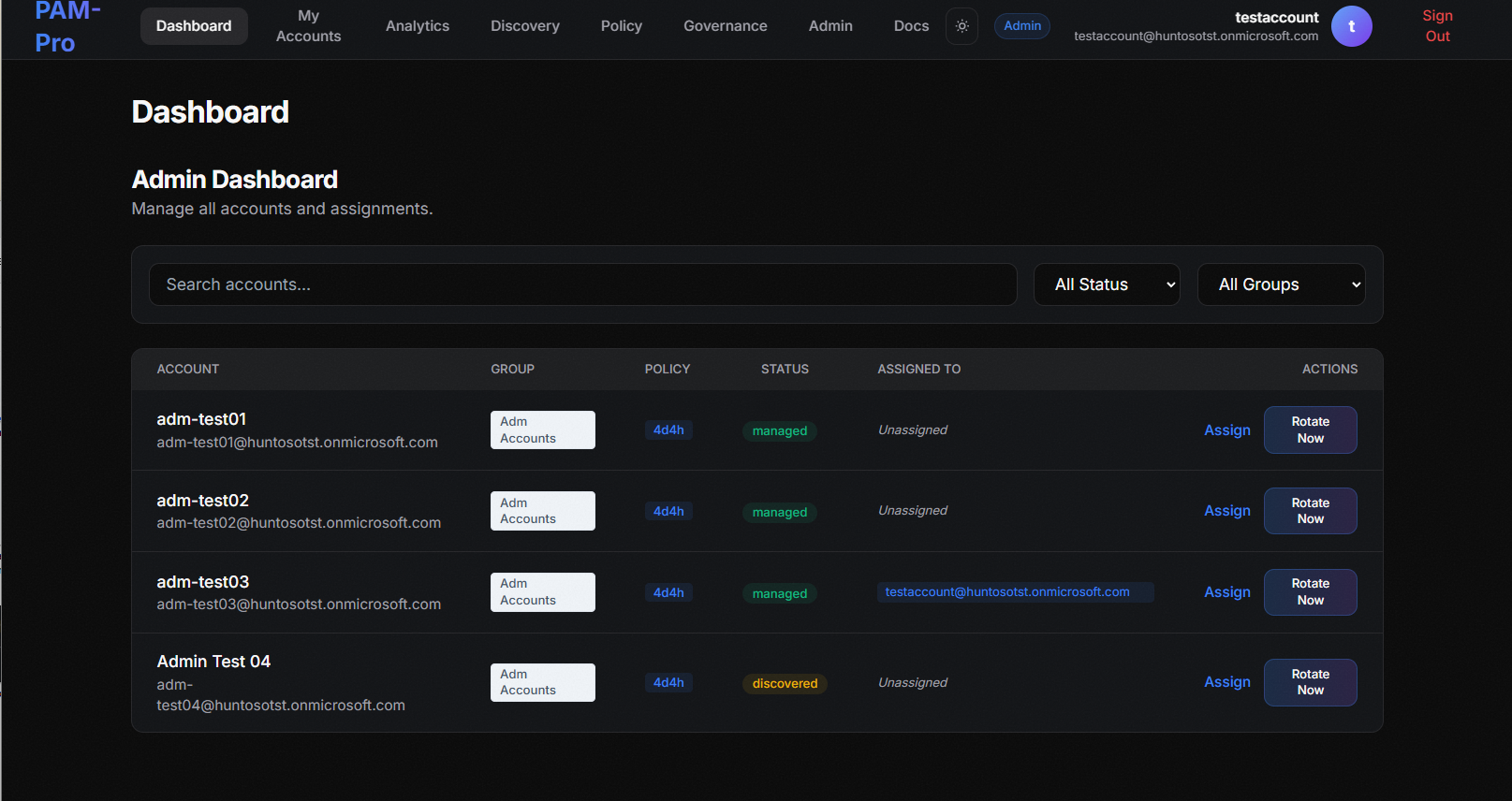
Most renewal conversations about privileged access still happen at the level of a single yes-or-no question: do you have PAM. That question used to be enough. It isn't anymore. Multiple 2026 industry sources now point to underwriters working from a more specific, six-point checklist when they evaluate privileged access controls, and a single "yes" on a questionnaire doesn't tell them, or you, whether all six are actually covered.
Here's that checklist, in plain terms, so you can score your own environment against it before a renewal asks you to.
1. Admin Account Separation
Does every person with privileged access use a distinct administrative account, separate from the one they check email and browse the web with? If an admin's day-to-day account also holds standing elevated rights, a single phished credential reaches both the inbox and the domain. "We have admin accounts" isn't the same claim as "admin accounts are separated from daily-use accounts," and the second one is what's actually being asked.
2. Least Privilege
Does each account hold only the access it needs for its specific role, or does your environment still have a handful of accounts with broad standing rights "just in case"? A least-privilege model means access is scoped tightly and reviewed against what a role actually requires, not granted generously up front and never revisited.
3. MFA on Privileged Accounts
Is multi-factor authentication actually required, not just available, on every privileged account? And a sharper follow-up worth asking yourself: is it phishing-resistant MFA, or does the policy still permit SMS or a push notification to satisfy it? If the policy allows any method on the list, it's only as strong as the weakest one.
4. Privileged Activity Monitoring
Can you produce a log entry for a specific privileged action, naming the account, the action, and the timestamp, without someone having to reconstruct it from memory or a spreadsheet? This is about whether elevated activity is logged and auditable, not whether it's recorded as video or session replay. Those are two different asks, and conflating them is a common gap in itself.
5. Periodic Access Reviews
Is standing privileged access actually removed when it's no longer needed, or does it just accumulate? A lot of environments grant elevated access for a project and never revoke it once the project ends. The honest version of this control isn't a quarterly spreadsheet review, it's an environment where dormant privileged access gets removed automatically rather than depending on someone remembering to check.
6. Credential Vaulting and Rotation
Are privileged credentials stored in a vault with enforced rotation, or do they live in a password manager, a spreadsheet, or a document nobody has touched since the account was created? Vaulting without rotation is just a more organized way to store a stale password.
Score Yourself Honestly
If you answered yes to all six without hedging, that's a genuinely strong position, and it's worth documenting specifically so a renewal questionnaire reflects it accurately rather than a generic attestation. If one or two answers were closer to "mostly" or "we used to," that's the actual gap a carrier's follow-up question is likely to find, and it's better to find it yourself first.
PAM-Pro's control set maps to all six of these directly, including automated deprovisioning of dormant privileged access in place of a manual review cycle. We'd rather describe that mapping precisely than let a generic "we support PAM" claim stand in for it. The full control-by-control breakdown is in the Underwriting Impact Overview, including where PAM Pro's coverage ends and a separate control would need to pick up.
© 2026 Huntoso LLC. All rights reserved.